

Conversations Across Time
The chum slick of A.I.—and the Future of Podcasting.

I’m doing a Tarot + Kabbalah Zoom workshop with the inimitable Mark Horn on March 21st at 10amPT—info on signing up is in this newsletter. Come join us!
A couple of months ago, I decided to listen to a very famous podcaster’s show. I’d never tuned in before and figured I should pay some attention to where so many people are putting their energy. I picked an episode at random and then startled when I heard her talk about the stories we tell ourselves about who we are, the difference between fact and story, and so on. Huh, odd, I thought. This is one of the main themes of On Our Best Behavior and more specifically, Choosing Wholeness Over Goodness, which is built on a tool from Conscious Leadership Group called Fact vs. Story.
I heard this same podcaster a few weeks ago as a guest on another show and she was talking about envy, specifically how envy shows you what you want. Okay, odd again. What are the chances?
For those of you who have only been here for a minute, envy is one of the main threads of On Our Best Behavior, built from my experience of interviewing and talking to a lot of people, observing myself, other women, the wider culture, and then putting it into a hypothesis about undiagnosed, unconscious envy being at the source of a lot of woman on woman hate. And I cite the people who inform that idea. It goes like this:
It started with a podcast conversation with Lori Gottlieb in 2019 called “Why You Should Follow Your Envy.” She made a small aside in Maybe You Should Talk to Someone where she talked about advising clients to pay attention to their envy because it would show them what they want. This really caught my attention and I had to ask her about it. From this conversation, I had the realization that I didn’t know what I wanted (sad) and that I refused to acknowledge I could possible be envious of anyone else because envy is “bad.” This realization planted an important seed for my book.
A few months later, in a conversation with Glennon Doyle recorded in January 2020, a couple of months before Untamed came out, I asked Glennon for her take on women and wanting, and she said, “Women struggle to acknowledge what they want, in part because we’ve been conditioned to believe we don’t actually have wants.”
I put these two ideas together with the work of Carl Jung to come up with the following (which you’ve likely heard me yammer on about): Women subjugate what we want to other peoples’ needs so what we want is largely unconscious: We’ve never really thought about it, nor are there a lot of women in the culture modeling what this looks like for us. (My mom never used what she wanted as a GPS; we typically deferred to what my father wanted, as one example—this was like an auto setting in my family.) When we see someone who has something we want, we don’t recognize it as envy because envy is “bad,” and not allowed, and so it’s disowned. This means that instead of recognizing envy as a signal, we stuff it: But because we feel deeply uncomfortable and irritated (we’re envious, we just don’t know it), we project that bad feeling onto the woman who is inspiring our envy and blame her for making us feel bad. I just don’t like her. She rubs me the wrong way. We miss the signal that she is irritating us because she has something—or is doing something—that we want for ourselves. We make her bad for making us feel bad. This, I believe, is the source of women-on-women hate. (I also talk about Lacy Phillips’ switch-up on this where you learn to use these people as Expanders: You study them, watch them, and use them as maps of possibility turning women you might have criticized into beacons for your potential future.)
I’m giving you the sourcing and cognitive process here because this is how we learn: Knowledge + experience turns into embodied wisdom. That, and as a journalist and author, I commit to clarifying and citing my sourcing and making a conversation with other writers and thinkers as transparent as possible. It is a great privilege to be able to bridge and build on the work of other people and it’s also my ethical duty not to steal other peoples’ ideas and pass them off as my own.
As I wrote in the Acknowledgments of On Our Best Behavior: “Dr. Gerda Lerner wrote in The Creation of Feminine Consciousness that historians know of fewer than three hundred learned women in Western Europe from before 1700. Cloistered, denied educations, and kept from one another, women have only been in conversation with each other for a few centuries—and in some parts of the world, not at all. I am immensely grateful to be alive at this moment: to stand on the shoulders of so many women, to speak with them across time, and to be able to braid and distill their work into new forms. I hope readers buy this book solely for its bibliography and its endnotes: My life has been made so much richer by those who came before me, whose scholarship informed my own.”
I have friends who find my citation insistence irritating—it can make sentences clunkier, bulkier, and more confusing. I over-quote. I get it. And yet revealing the strands I’m braiding, the sources of my synthesis, is one of the points of my work. We are all participating in the same root system, the same lattice-work of ideas: What gives it its strength and durability and human-ness is that it’s intertwined, connected, and deeply grounded in what’s real. My process will always, always be transparent. Not only am I “doing the right thing,” but I think that it’s inherently a service: To expose the underlying logic and thought process so anyone who reads me (my books or this newsletter), or listens to Pulling the Thread, understands why I think what I think. I work very hard at increasing and broadening my mind—at growing myself up—because that’s what life requires of all of us. I try to integrate and live what I share because I see this as a group project. We don’t earn the moral without living the story but we can live our stories without feeling so alone. I’m not trying to rush anyone to a pithy punchline, nor am I trying to pass myself off as the cleverest of them all—or, god forbid, a guru (See: “The End of Guru Energy”). I hope that my work makes people pause, think, consider, and hopefully understand why they do what they do, and whether they can, or should, do something different instead.
One of the eeriest parts of dealing with A.I. is that its sourcing does not explain its deductions, or how it got from here to there. I look at what it’s “referencing” and I can’t always follow: It’s not an amped up search engine (though that’s mostly what I use it for). Instead, it’s feeding off collective churn (and as we’ve come to understand, itself). This makes the experience feel like a glass of skim milk, like it’s reading an algorithm of regurgitated culture and it’s dishing up what once was cream to be re-warmed, and re-consumed. It is not, inherently, novel, or new—it’s the chum slick at the top of the ocean. To that end, I doubt the podcaster I mentioned above is paying attention to me, or Lori Gottlieb, or Conscious Leadership Group, etc.: Likely, the “insights” she’s delivered as her own were skimmed by a producer, or ChatGPT, or surfaced as algorithm-friendly content that she then re-packaged and better marketed. She doesn’t know what she’s doing because she never came in contact with the root source itself.
This podcaster’s M.O. is a symptom of what’s happening to us, not the cause itself. (And she’s not alone—more and more podcasters are showing up as vivified versions of ChatGPT…they’re also the most likely to make AI versions of themselves to market to the public, only accelerating the chum.)
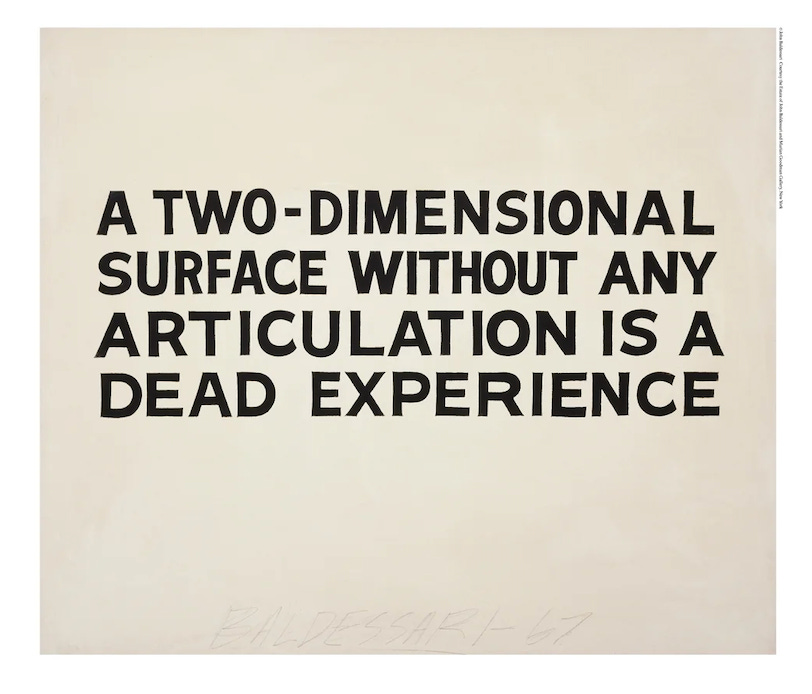
The root cause—what worries me deeply—is not about credit. Credit is important, and also who cares; it’s more about a posture. It’s about the death of originality and the atrophying of brains. If we outsource our synthesizing to AI, if we let it string disparate ideas together on our behalf, how will we ever create anything new? What we need now—arguably more than ever—is originality, deep creative thinking, and novel solutions and systems to meet the future.
I was emailing a bit with Llewellyn Vaughan-Lee (one of my heroes) about this, and he pointed me to a piece he wrote recently about Artificial Intelligence and spiritual life. His overarching point is that AI functions on the past: It consumes data and generates patterns based on what already is. While this might appear as fresh insight and be helpful in finding commonalities and trends, it’s not ushering anything new. As he writes, “AI by its very nature can only recreate past patterns and thus encourages us to overidentify with a way of thinking that has become globally self-destructive.” We need, instead, “a new quality of consciousness,” and that will only come through us—access to the higher self, or what he would call the atman. There are no shortcuts, only deep inner work and growing ourselves up. No “hack” will get us there; technology will not save us. Neither has a heart.
But we can help and save each other: This is not only through conversation—across time and culture—but it’s through generating and maintaining an active lattice, or power grid. We are all its empowerers; there’s no outsourcing here. Rebecca Solnit did “The Interview” for The New York Times this past weekend to talk about her new book, The Beginning Comes After the End, and reminded us: “Thich Nhat Hanh said before he died a few years ago that the next Buddha will be the Sangha. The Sangha, in Buddhist terminology, is the community of practitioners.” This is a collective responsibility; we aren’t meant to do it alone. No superhero, no “guru,” no sole podcaster holds the answers we seek. And neither does A.I. We each hold a corner of the map: We are all wayfarers. It will require all of us to navigate our part.
Stick with the citations: you’re spot on about the ‘threads’ and the importance of weaving them through history. Otherwise, as your mentors note, you’re simply rehashing and giving yourself strokes, not breaking the new ground necessary to stay present and accounted for in consciousness evolution.
Your citations give me joy as a history major. They really help me see the through line, what inspires you, and they inspire me to read more.